First coastal beacon points
Harbor communities raised simple light stations at cliff edges to reduce winter wrecks near reef-heavy approaches.
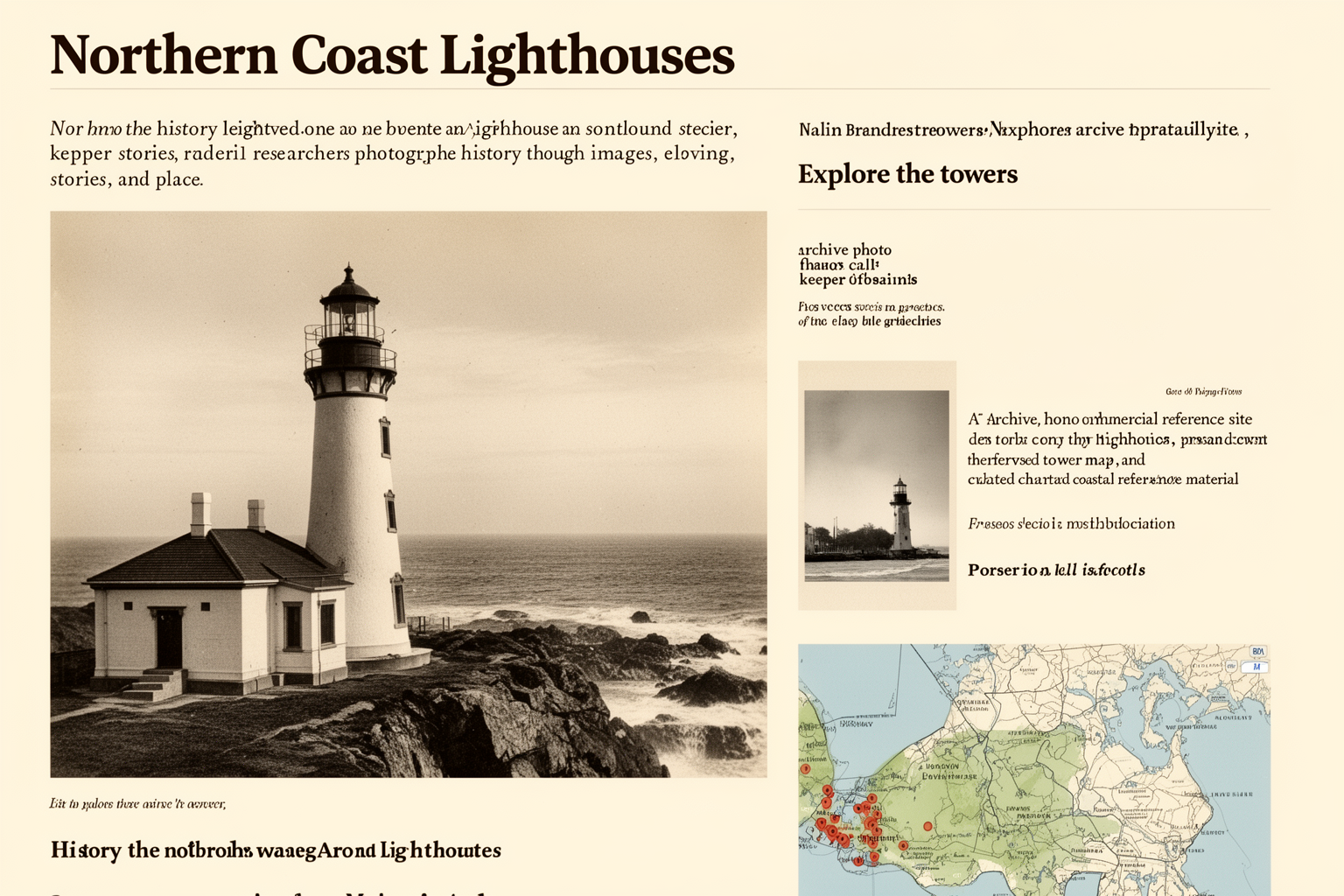
Built to guide ships through fog, reefs, and winter surf, these towers evolved from working coastal infrastructure into preserved witnesses of maritime life, local labor, and shoreline memory.
History timeline
A concise sequence of turning points—from early fire beacons to preservation work—so readers can quickly trace how function, technology, and stewardship evolved along the coast.
1802
Harbor communities raised simple light stations at cliff edges to reduce winter wrecks near reef-heavy approaches.
1841–1890
Engineered towers with stronger optics expanded nighttime routes as timber, fish, and mail traffic intensified.
1891–1935
Logbooks, fog-signal routines, and shared training connected isolated stations into a coordinated safety system.
1936–1978
Power upgrades and remote controls reduced permanent staffing while storms and war damage prompted major repairs.
1979–today
Heritage groups stabilized surviving towers, opened archives, and linked sites to educational and cultural trails.